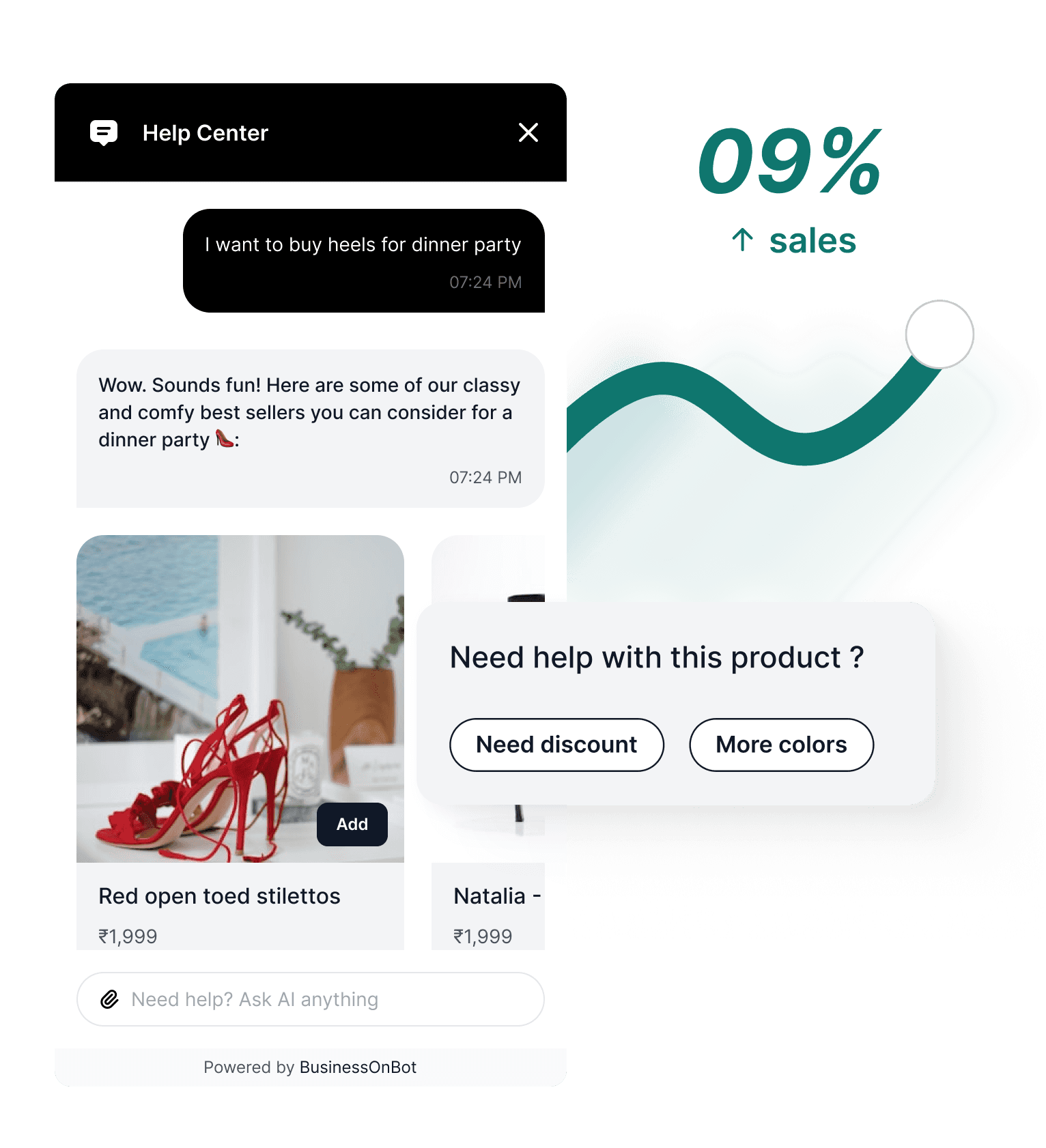
Business On Bot is a platform that helps D2C brands offer customer support and sales services. So the AI chatbot (conversational assistant) will be placed on the websites of these brands.
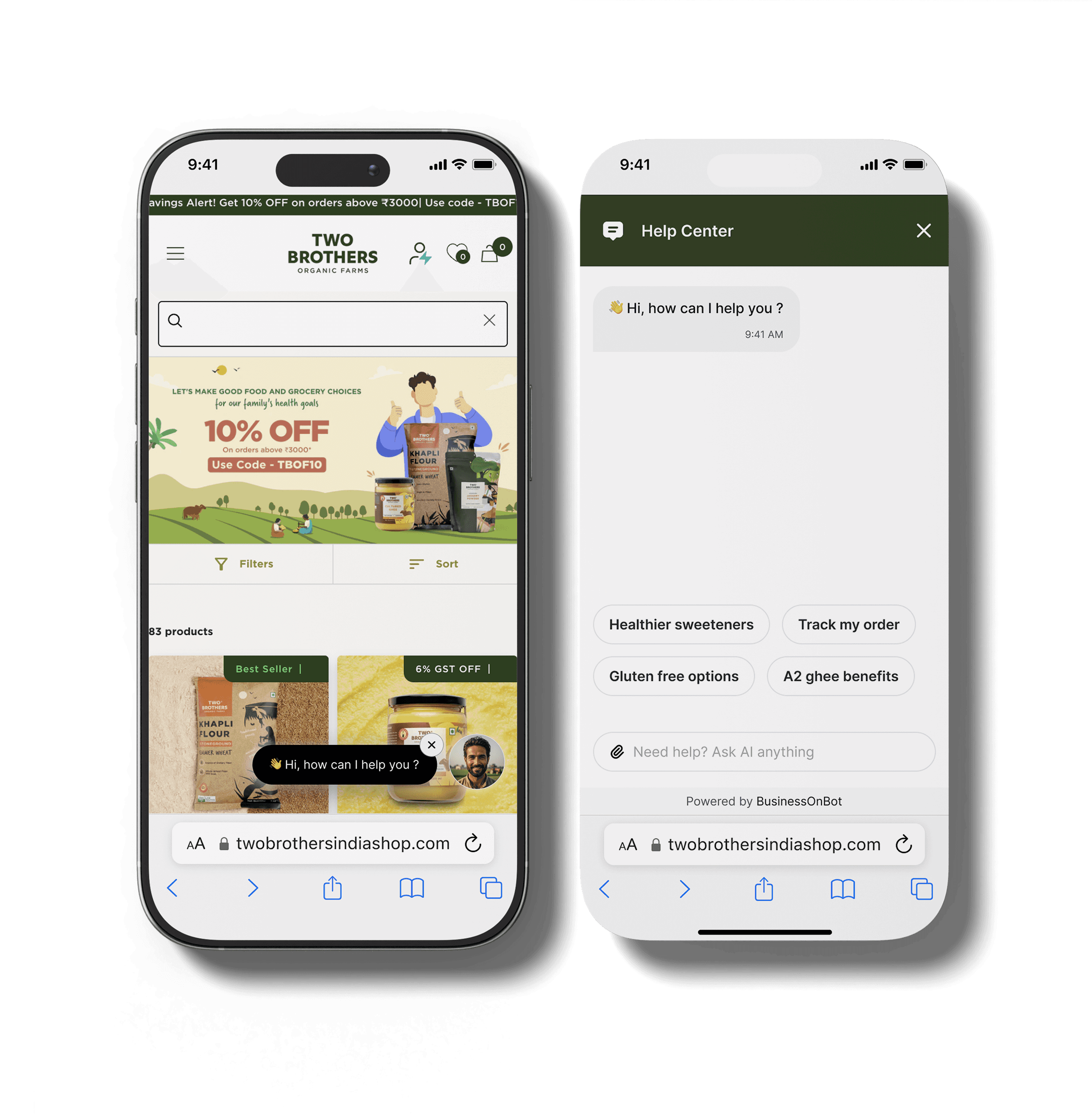
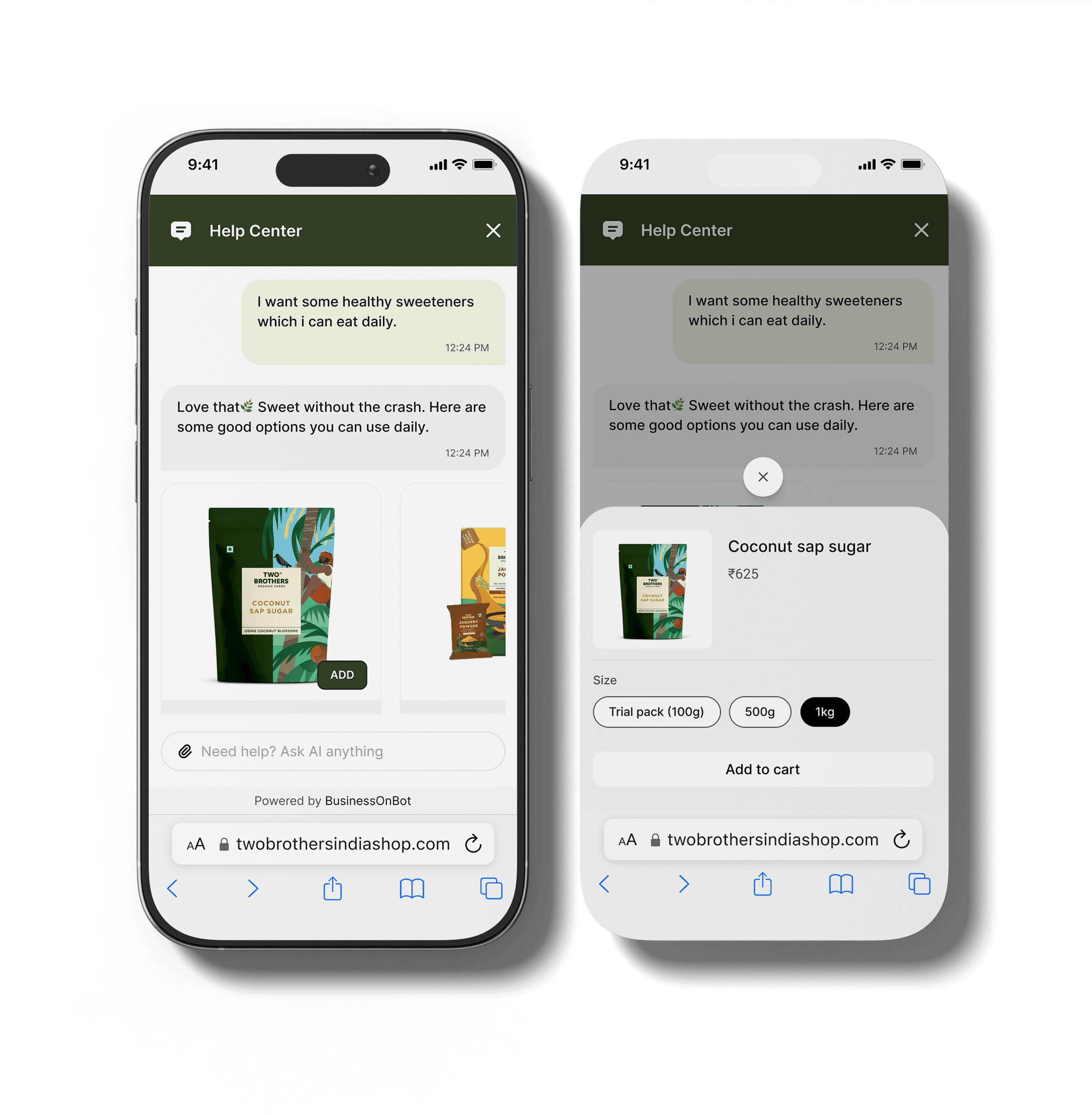
The AI chatbot is a sales bot, built by breaking the whole buying journey into simple, conversational steps. It talks to visitors, understands what they need, answers questions instantly, and gently pushes them towards buying. Making the overall experience fast and helpful.
CONVICTION
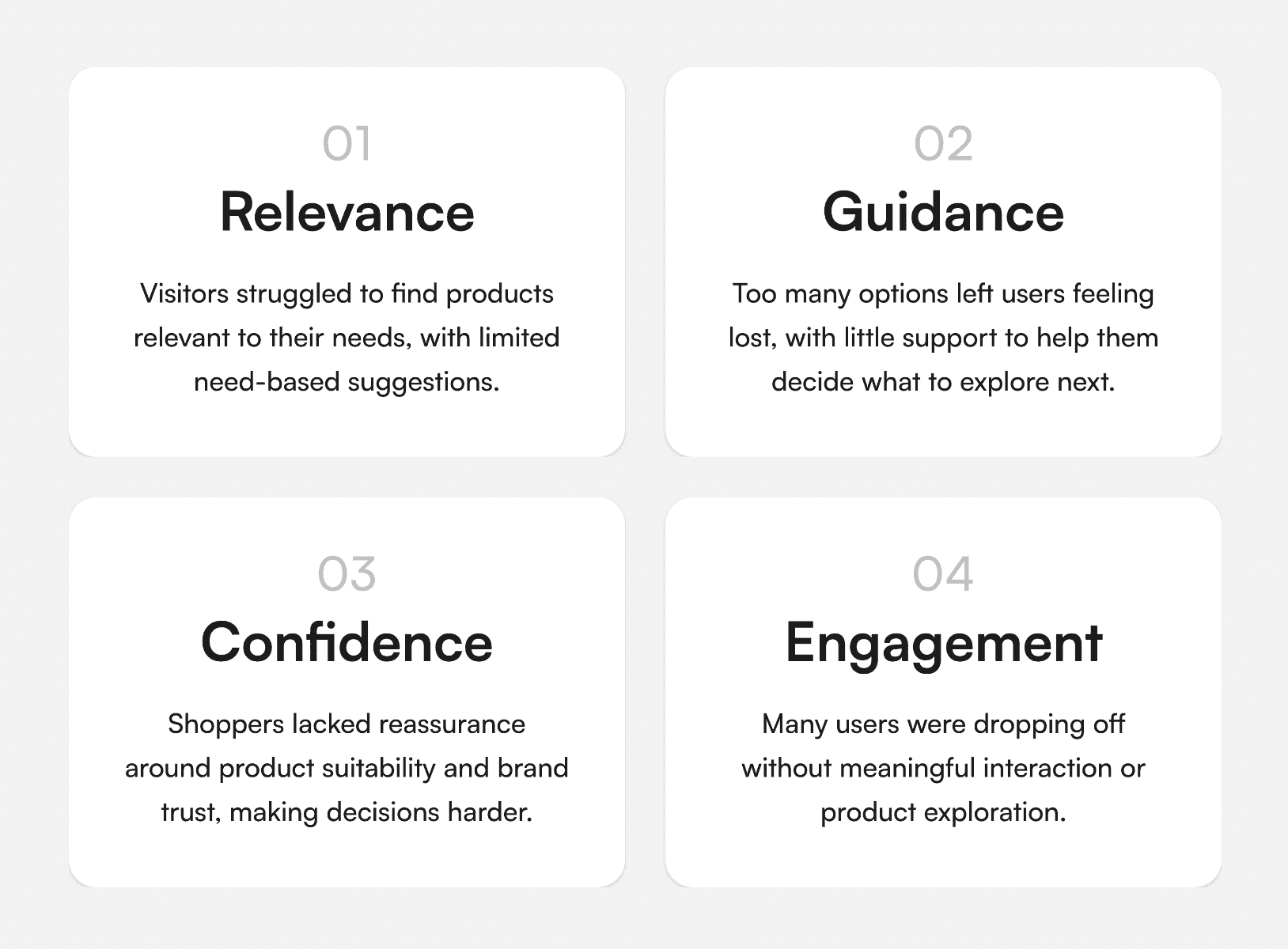
Hypothesis: Users feel confused while shopping online and need instant guidance; a sales-focused chatbot can answer their questions and make buying faster and easier.
Market research: We saw a pattern of brands churning to competitors specifically for on‑site AI assistants, with alternative tools claiming conversion lifts in the range of 10–20% and significant reductions in support load. This indicated that now an AI chatbot is a must have rather than a good to have.
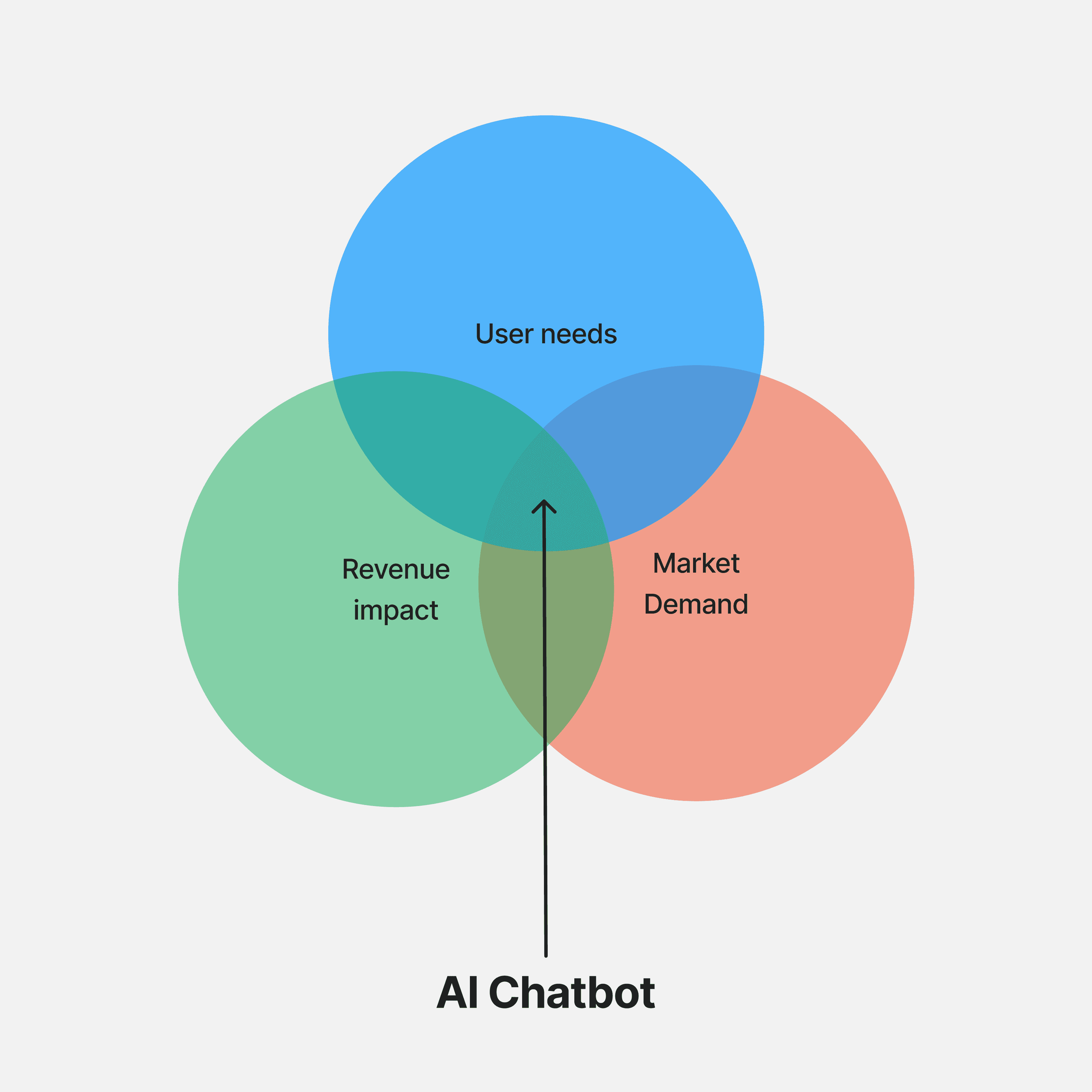
User research: We spoke with brands to understand how they currently handle product discovery, and information lookup on their websites. The research focused on understanding workflows, pain points, and their openness toward AI led support.
These conversations confirmed that users often need immediate guidance during purchase, while brands lacked a scalable way to provide it in real time. This validation strengthened our conviction to build a sales-focused AI chatbot that could assist users at the moment of decision and speed up the buying process.
Buy in from high MRR (Monthly Recurring Revenue) brands: In discovery calls, several of our highest MRR brands explicitly committed to enabling and prioritizing the AI chatbot once available, positioning it as a key lever for faster responses, lower ticket volume, and higher on‑site conversions. Some of them were already using AI chatbots of competitors. This intent from top tier accounts gave us strong confidence that shipping the chatbot would have a direct, measurable impact on both retention and revenue.
CONVERSATION INSIGHTS
DESIGN APPROACH
Many brands had already conducted research showing that their users primarily access their platforms via mobile. Few of them were Timus Lifestyle, Mokobara UAE, Mybageecha, What the flex. We got insights from these brands that most of their users are mobile users. This indicated that most conversations with the AI chatbot will happen on mobile devices. Based on this, we adopted a mobile-first approach, ensuring the experience worked seamlessly on smaller screens before scaling to desktop.
This decision was further validated in V1, where device usage data showed that around 66% of users opened the chatbot on mobile, reinforcing our initial research and confirming that mobile should be the primary design focus.
Designing for mobile first helped us:
Prioritize clarity and simplicity: Limited screen space forced us to focus only on essential actions, reducing cognitive load.
Optimize reach and accessibility: Thumb-friendly tap targets, readable text sizes, and clear hierarchy made interactions comfortable for one-handed use.
Improve performance and speed: Lightweight UI elements and concise responses ensured faster load times on mobile networks.
Scaling to desktop: Once the mobile experience was solid, the layout expanded naturally for larger screens without adding unnecessary complexity.
AI CONVERSATIONAL TRAINING
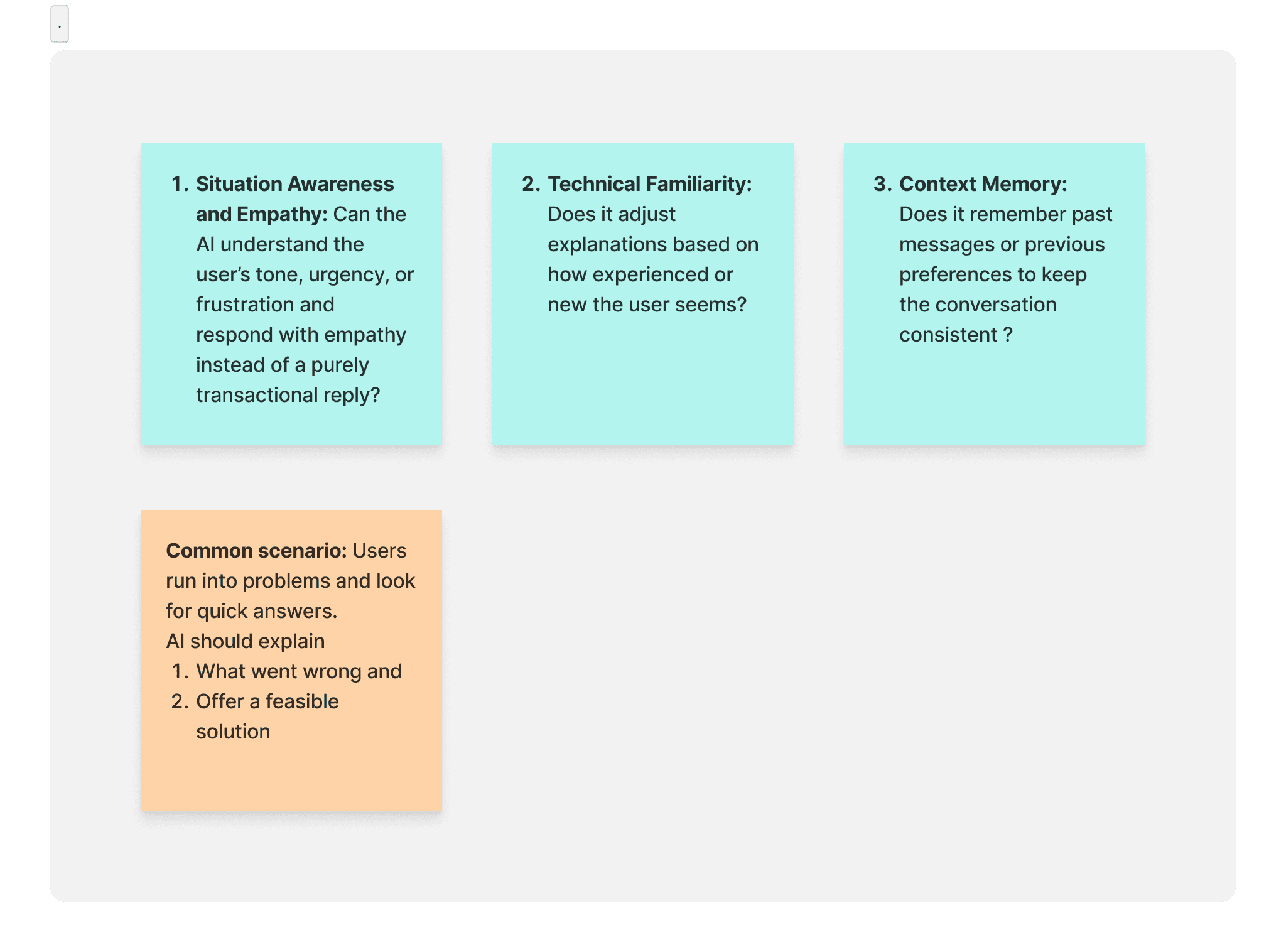
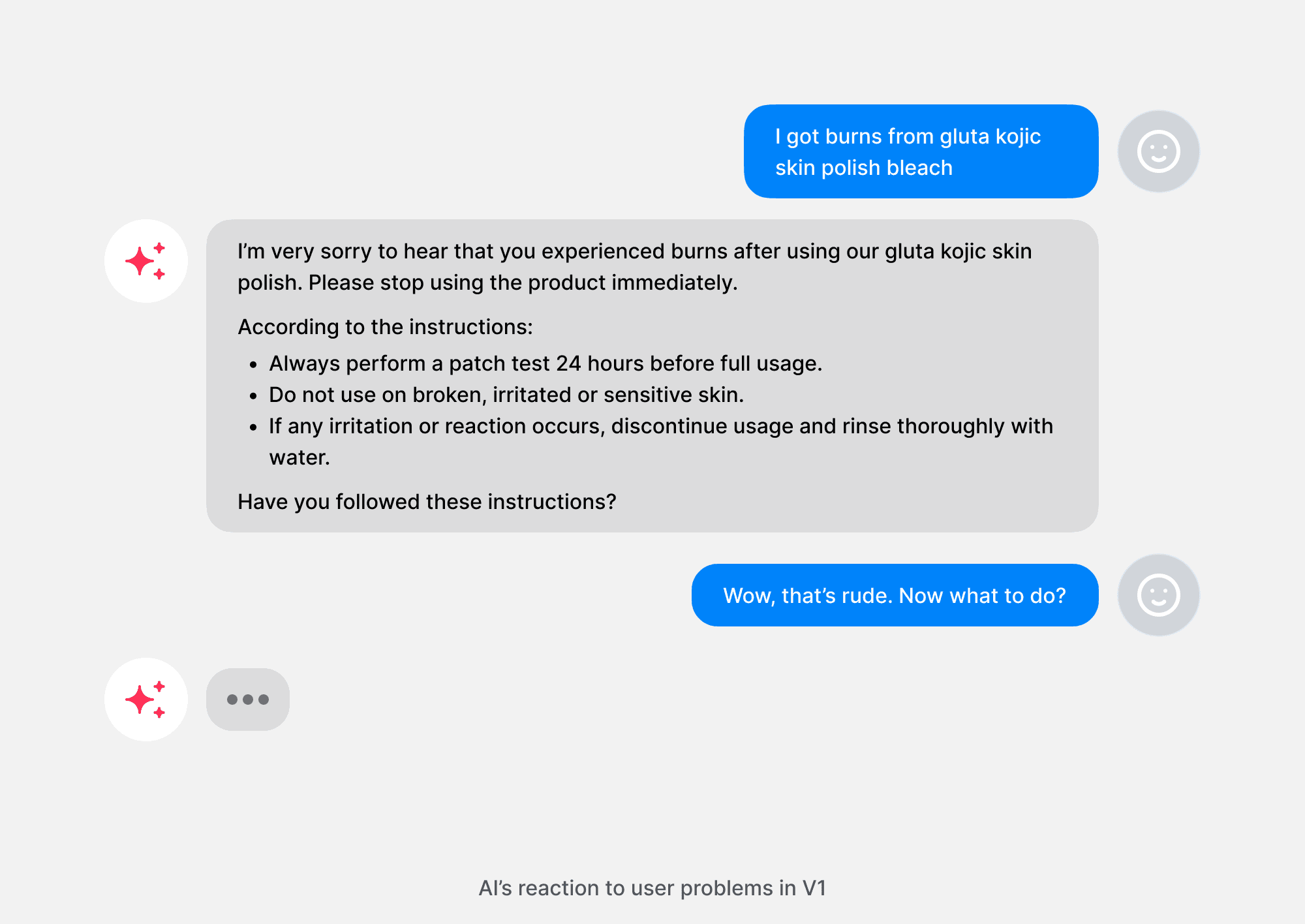
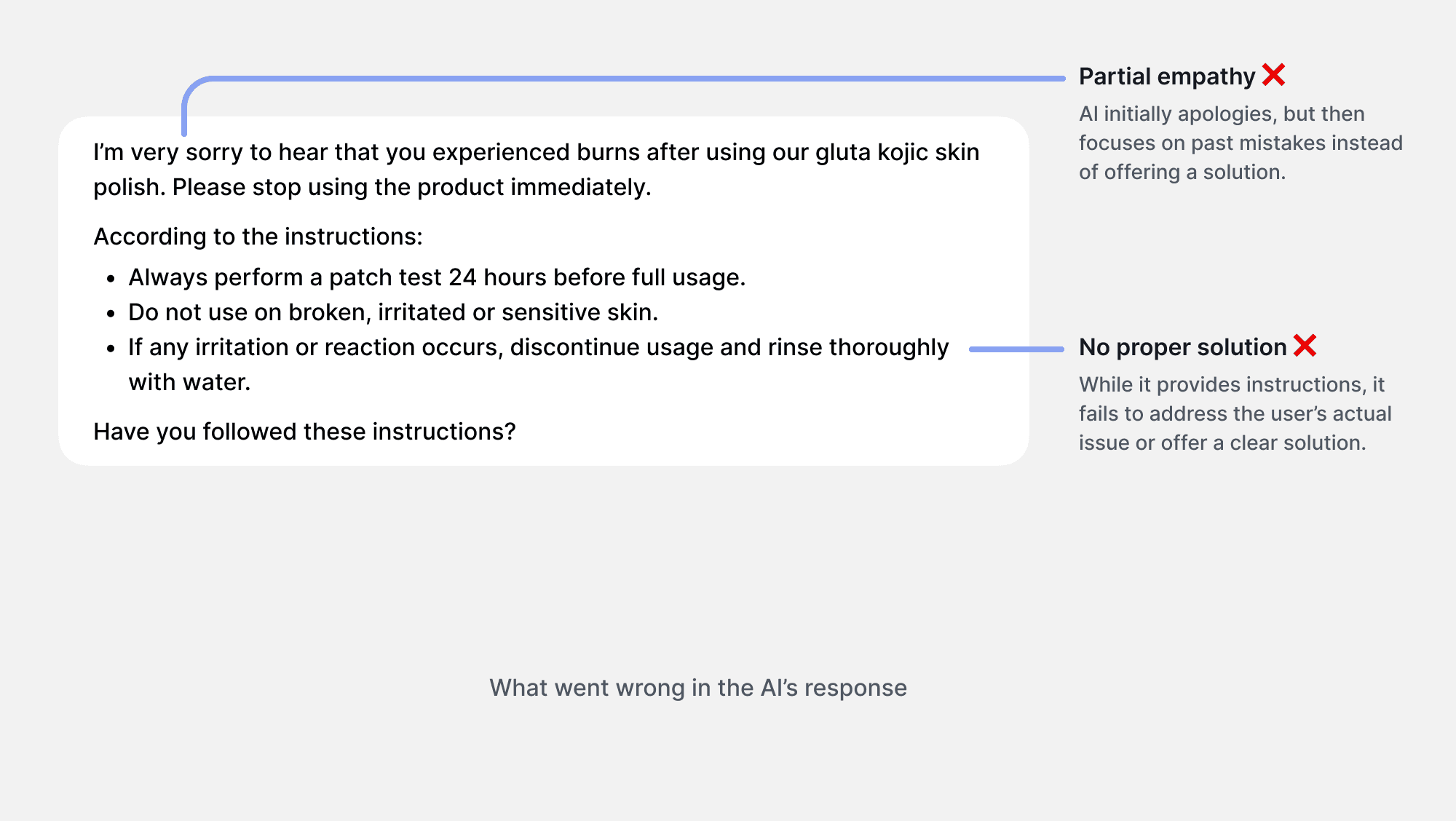
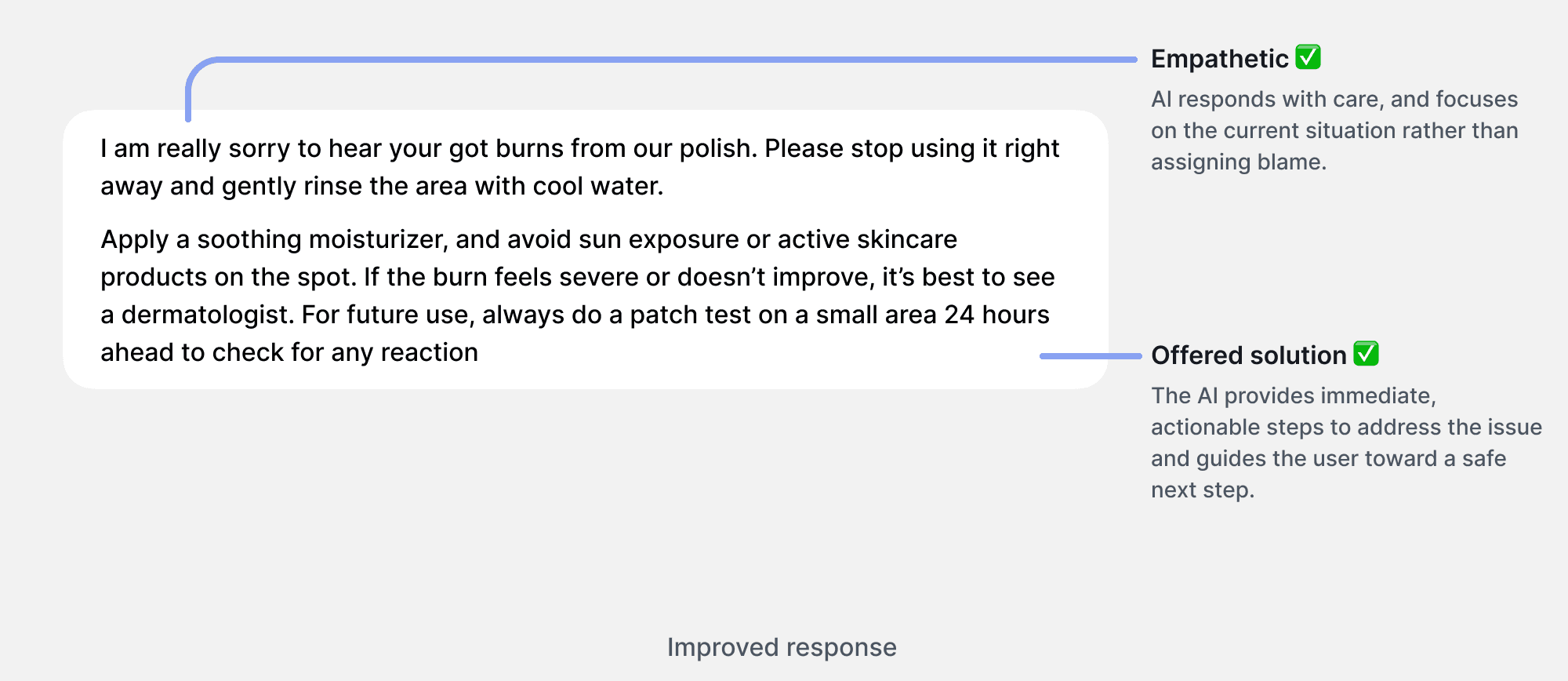
To make conversations feel human and meaningful, the AI should adapt to the user. It must read their emotions, gauge how familiar they are with technical details, and remember previous interactions. This allows the AI to respond in a way that feels personalized and context aware.
For this case study, I evaluated conversational quality based on three criteria:
Situation Awareness and Empathy
Technical Familiarity
Context Memory
FINAL DESIGNS
DESIGN DECISIONS
01 Designing for real usage, not assumptions
Instead of designing the AI chatbot as any generic chatbot in the market, we aligned closely with our use cases: sales queries, product discovery, and post purchase questions. Early insights from brands showed that users expected instant, conversational help rather than static FAQs, which directly shaped the chatbot's structure and response patterns.
02 Mobile first execution backed by data
Brand research already indicated that most users interacted via mobile. This was validated post-launch, where ~66% of users accessed the AI chatbot on mobile. Designing mobile first ensured faster iteration, fewer layout changes later, and a smoother rollout across brands.
03 Content-aware AI over scripted flows
Instead of rigid, rule-based replies, the AI agent was designed to understand user intent and context. Especially for sales related questions. This reduced dependency on predefined flows and allowed brands to scale conversations without constantly updating scripts.
IMPACT
of website visitors opened chat for assistance
increase in website orders due to chatbot interactions
brands using core platform added chatbot module
24/7 Sales Support
The AI chatbot handled 24/7 sales and product queries, reducing dependency on live agents and ensuring no user query went unanswered due to time constraints.
Clearer Planning for Brands
Brands reported better visibility into user intent and frequently asked sales questions, making it easier to optimize product listings, FAQs, and campaigns.
NEXT STEPS
While the current AI chatbot effectively addresses sales led conversations, several partner brands, especially B2B brands require stronger post purchase and support focused interactions.
Need for Unified Support + Sales AI Chatbot
The next phase focuses on building a combined support and sales bot that can:
Handle customers post purchase support queries such as order status, returns, refunds, and troubleshooting.
Continue to assist with product discovery and sales conversations, ensuring no drop in conversion focused use cases.
By improving intent classification, the AI chatbot will dynamically switch between sales mode and support mode, escalating to human agents only when required.This evolution will allow brands to manage both revenue and support workflows through a single conversational interface, reducing operational overhead while improving response times and customer experience.